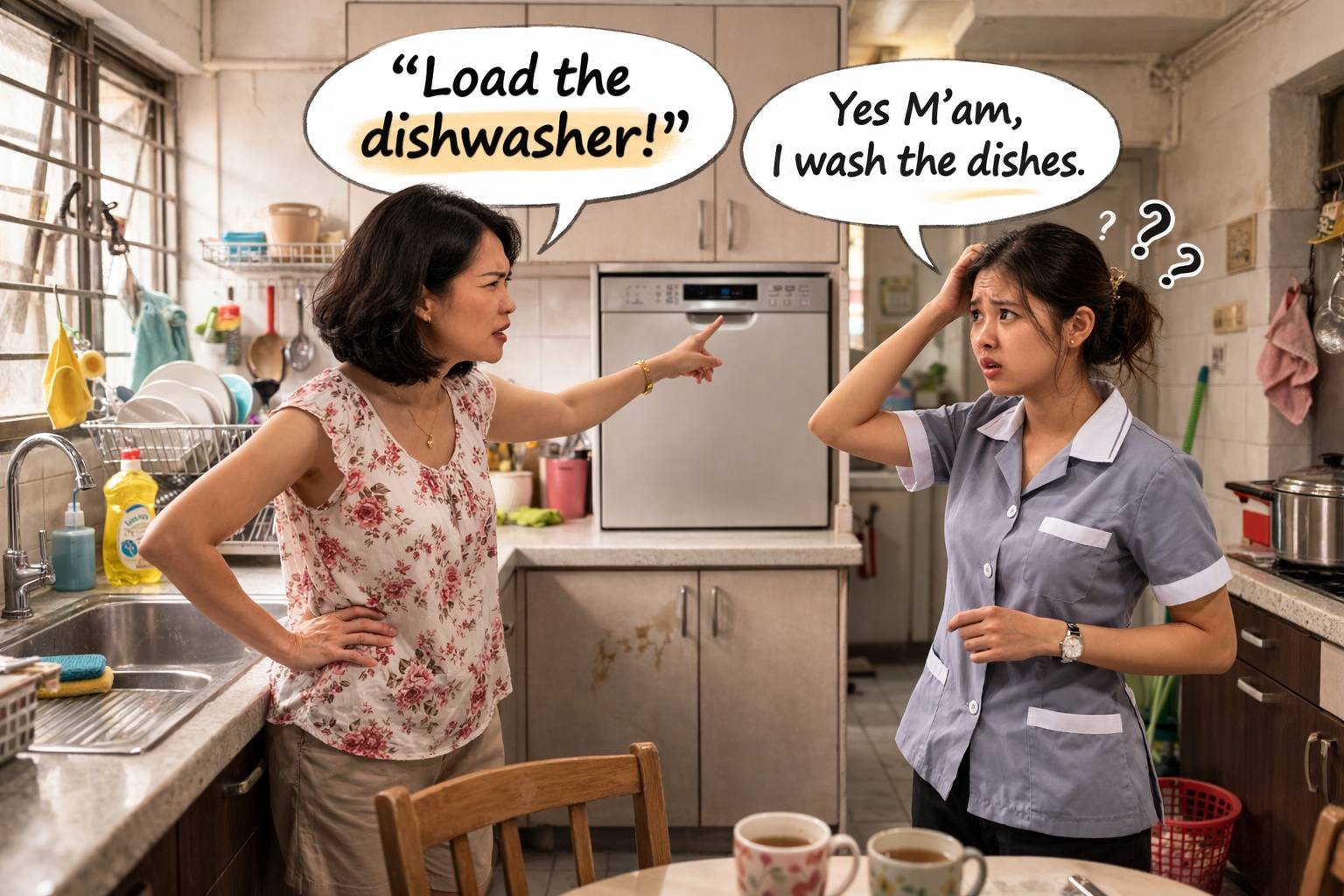
Hiring a helper is stressful enough.
But once she's finally home... a lot of employers don't really know what to do next.
No clear routine. No real conversation. Just hoping things figure themselves out.
That's where most problems start.
So I sat down with Sarah Magnus, the boss of Haven Hands Pte Ltd...
and asked her what actually makes a helper placement last.
 |
Haven Hands Pte Ltd License No: 25C3257 Agent Name: Sarah Magnus EA License No: R1549677 |
Establish Clarity from the Onset
Long-term stability begins before the first day.
Sarah says employers should already have clarity on:
-
Scope of duties and priorities
-
Household standards and routines
-
Rest day arrangements
-
Handphone usage rules
-
How you want her to raise problems with you
Ambiguity leads to frustration. Precision builds confidence.
She told me about a petite helper from Myanmar who accepted a job to "care for Ahma." It sounded straightforward enough.
But nobody told her that Ahma was 70kg and needed to be physically carried from bed to wheelchair every morning.
The helper wasn't able to do it.
Not because she was unwilling.
She physically couldn't.
The employer was frustrated.
The helper was stressed.
The whole thing could've been avoided with one honest conversation before she even boarded the plane.
At Haven Hands, Sarah runs a structured pre-placement discussion with every family before deployment.
Get this sorted before she's standing in your living room.
Her First Few Weeks Are Everything
Once she's in, treat the first few weeks like a proper onboarding.
Helpers come from diverse backgrounds.
What seems obvious to you may be genuinely new to her.
A helper from a village in Myanmar has probably never seen a dishwasher or your Dyson vacuum cleaner.
She doesn't know your household rules around handphone usage.
None of this is her fault. She just doesn't know yet.
So show her, don't assume.
Walk her through every appliance, every preference, every house rule.
Then back it all up with structure:
-
A written task schedule
-
Clearly defined daily routines
-
Emergency protocols she actually knows about
-
Scheduled check-ins to see how she's settling
Sarah told me about a family who had just brought in a new helper from Indonesia.
First time in Singapore, never cooked Chinese food, unfamiliar with the household. Instead of winging it, they spent a weekend going through everything together.
Morning routine, school pickup times, what to prep for dinner on which days.
They showed her how the stove worked, where the cleaning supplies were kept, what to do if one of the kids had a fall.
Their helper settled in within two weeks. She's been with them going on four years now.
Keep Talking After She Settles
The first few weeks aren't the finish line.
This is where a lot of employers go quiet and assume everything is fine.
Sarah's advice:
-
Do periodic check-ins
-
Give feedback that's constructive, not reactive
-
When something needs adjusting, say it clearly and calmly
If she's folding clothes you want hung, say so on day three, not month three.
If her cooking needs work, show her the dish once and explain what you're looking for. Don't save things up.
Small issues left unsaid quietly build into real resentment. On both sides.
Basic Professionalism Goes Both Ways
A helper is a live-in employee operating in a unique environment. Professional respect is foundational.
That means:
-
Paying her salary on time
-
Honouring agreed rest days
-
Respecting her privacy and personal space
-
Addressing disagreements without hostility
Give her a proper corner of the house that's hers. Don't go through her things.
If something needs to be said, say it like you'd want someone to say it to you.
She's living in your home, usually far from her own family.
Households that treat their helpers with basic dignity consistently see more loyalty and longer placements.
The Right Agency Makes a Bigger Difference Than You Think
A responsible agency does more than process paperwork. Their role covers:
-
Careful candidate screening
-
Matching employer expectations to helper suitability, not just skills
-
Ongoing support after placement, including a second opinion if something feels off
Sarah once turned down a placement because the personality fit wasn't right.
The employer wanted someone high-energy, comfortable with a chaotic household.
The candidate in front of her was calm and methodical, better suited for elderly care.
Skills matched. Personality didn't. Sarah said no.
Most agencies would've pushed it through and collected their fee.
At Haven Hands, the relationship doesn't end once the helper moves in.
If you're ever unsure how to handle a situation or just need someone to talk it through with, that's part of what they're there for.
Conclusion
Successful placements aren't built on luck.
They're built on clarity, structure, and basic mutual respect.
When employers put in the effort upfront, set clear expectations, and treat their helper professionally, stability stops being something you hope for.
It becomes something you build.
That's what Haven Hands is committed to. Placements that are actually designed to last.
How to contact Sarah (Haven Hands)
Whether your last placement didn't work out or you're hiring for the first time and want to get it right...
Sarah and her team at Haven Hands are worth reaching out to.
WhatsApp or call: +65 80731917